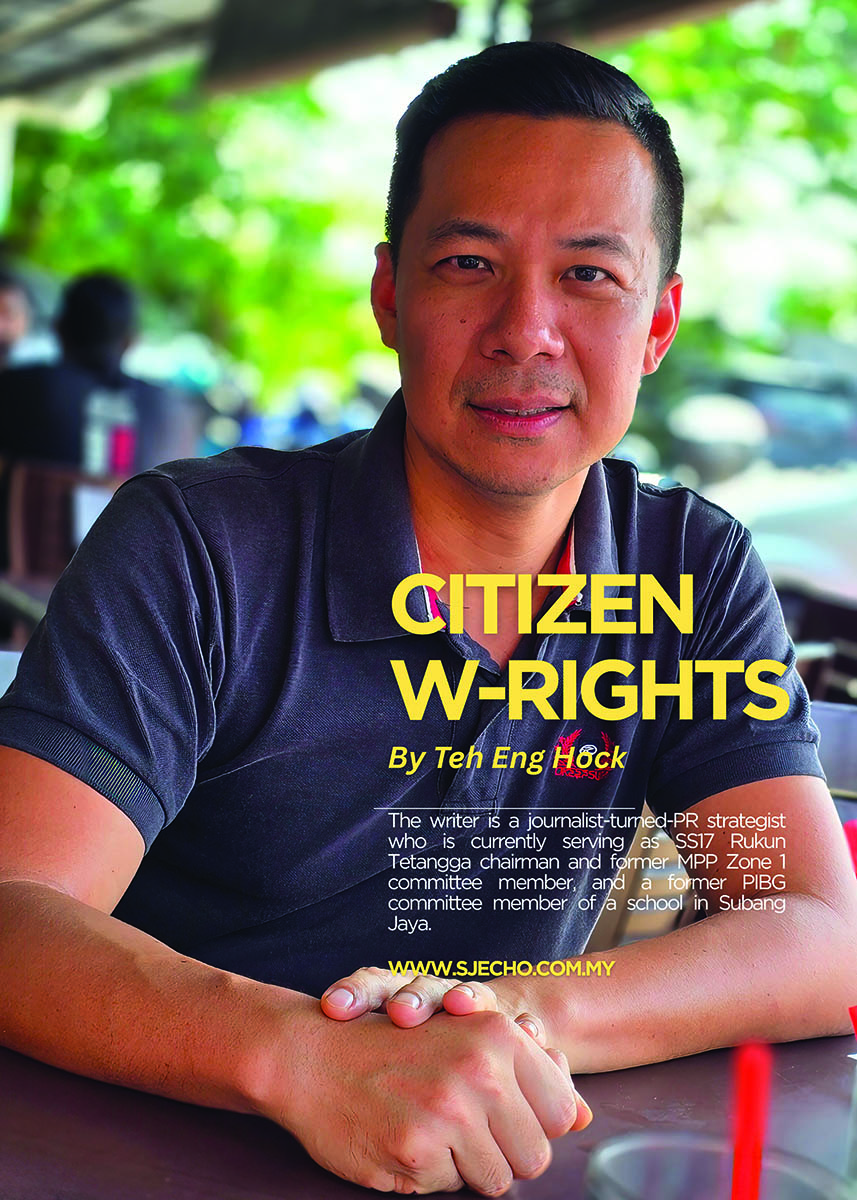
By Teh Eng Hock
Recently, Federal Territories Minister Hannah Yeoh announced that a feasibility study has been commissioned to explore mayoral elections in Kuala Lumpur. The proposal sparked strong reactions on both sides, but here I’ll focus purely on systems, processes, and policies.
Kuala Lumpur City Hall is unique among Malaysian local councils. It has no councillors, neither elected nor appointed. Instead, the Mayor is advised by an Advisory Board. This structure concentrates significant power in the Mayor’s office, with limited checks and balances. Regardless of whether the Mayor is appointed or elected, I believe a stronger role for City Councillors is essential.
In my ideal system, councillors would be elected by the people, with the Mayor chosen from among them. Or perhaps some would prefer a direct mayoral election, similar to New York City. There, residents elect the Mayor, Comptroller, Public Advocate, and 51 City Council Members. The Comptroller oversees finances, the Public Advocate investigates complaints about city services, and the Council Members legislate, hold hearings, and approve budgets.
New York’s City Council Members function much like councillors of Subang Jaya City Council (MBSJ), sitting on committees that address zoning, land use, transportation, infrastructure, environmental protection, and so on.
At least on the surface. To be doubly sure, you could fly me in to New York to verify.
The key difference is that New York’s councillors are elected, while ours are appointed by political leaders. Does election confer greater legitimacy simply because councillors are chosen directly by residents?
I believe in shared accountability. If people elect ineffective councillors, the responsibility lies with them: they chose poorly. This makes it harder to blame the state government or assemblymen, which is often the case today when residents are unhappy with appointed councillors.
Selangor once experimented with local elections. In 2011, pilots were conducted in Kampung Bagan, Pulau Ketam; Kampung Baru Sungai Jarom, Jenjarom; and Kampung Baru Pandamaran. These were simplified, with only village chiefs up for election. For reasons never clearly explained, the pilots were neither declared a success nor a failure, and they were not repeated.
Beyond the question of election versus appointment, there is a deeper systemic issue. Councillors are meant to provide checks and balances at the local level. Yet the Mayor, effectively the CEO of the council, also presides over the full board meetings attended by councillors. This is akin to the Prime Minister doubling as Speaker of the Dewan Rakyat.
When the same individual both drives policy execution and chairs the forum meant to scrutinise it, the line between accountability and authority blurs. Decisions risk becoming rubber-stamped rather than rigorously debated, and residents lose the assurance that their concerns are being independently voiced.
In governance, separation of powers is not just a lofty principle: it is a practical safeguard. The chair of a council meeting should ideally be neutral, ensuring fair debate and orderly process, while the Mayor should focus on execution and delivery. Combining both roles creates a concentration of influence that is difficult to challenge.
In the corporate world, you only get to be both Chairman and CEO if it’s your grandfather’s company. And Subang Jaya (or Petaling Jaya, Georgetown, Johor Bahru or Kuching), does not belong to your grandfather.
It belongs to its people, who deserve a system where oversight is genuine, voices are heard, and leadership is accountable. Until that balance is restored, the promise of local democracy will remain incomplete.