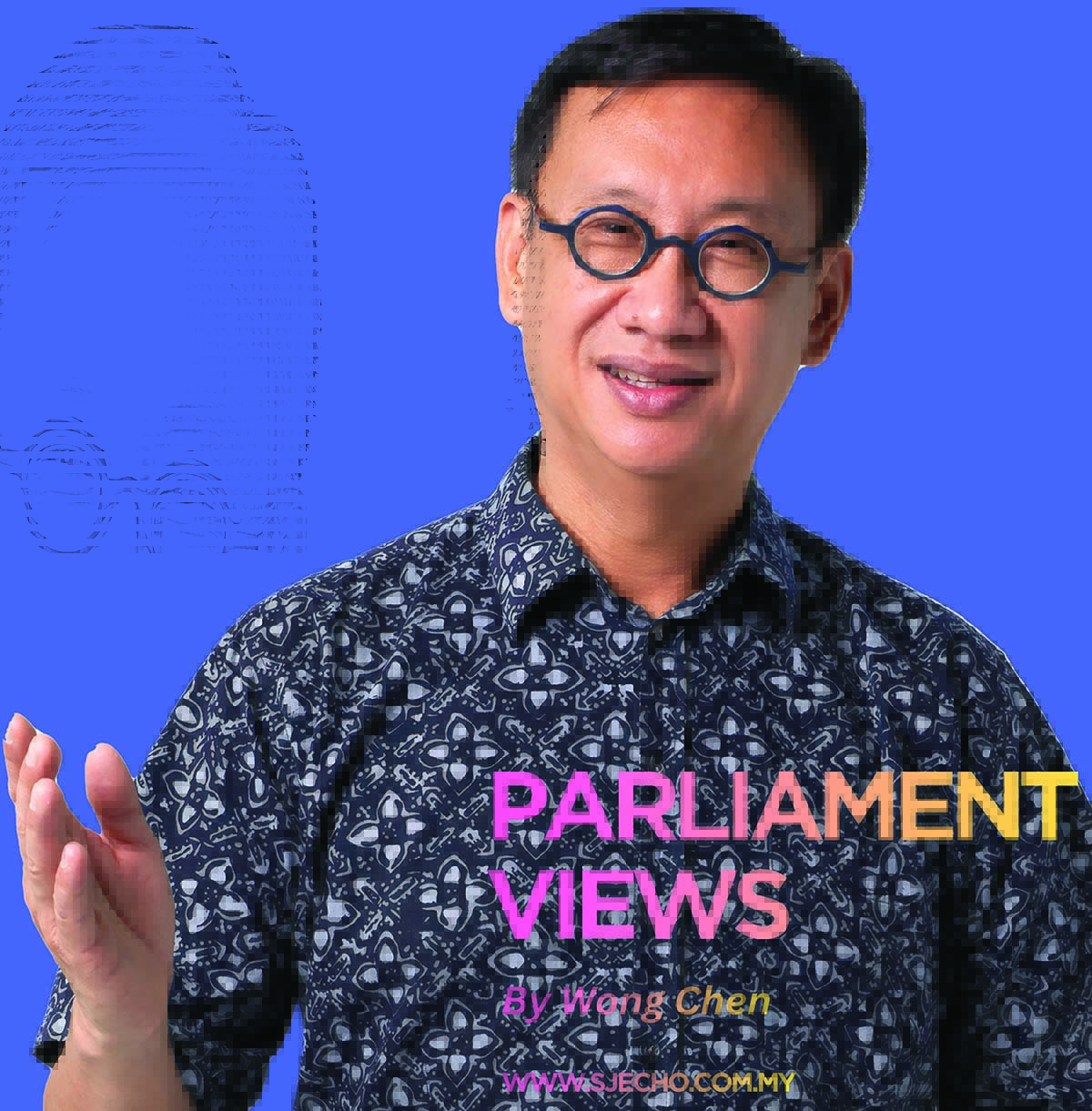
For this month’s article, I have chosen to translate and reproduce in English, my recent speech in Parliament in response to the Yang di-Pertuan Agong’s address urging MPs to fight corruption.
The speech is long and was written for a time slot of 25 minutes. However due to many interjections from other MPs during the delivery of the speech in Parliament, about 20% of my speech was unspoken due to time constraints.
As such, I am reproducing the entire written and intended speech here so that those unspoken but crucial words are not lost.
On other matters related to Subang, I will continue to push for full transparency and accountability of my own Selangor Government on the lands near Ayer Hitam Forest Reserve. As for the controversial issue of the flyover…
TEXT OF THE ROYAL ADDRESS DEBATE 2026
YB TUAN WONG CHEN, MEMBER OF PARLIAMENT P.104 SUBANG
Thank you, Mr Speaker, for giving me the opportunity to take part in the debate on the Royal Address. On 19 January 2026, His Majesty the Yang Di-Pertuan Agong delivered a Royal Address that was excellent, concise, and straight to the point on the most critical issue of all: the threat of corruption.
I was deeply moved and also felt great sympathy when Tuanku, as the Supreme Commander of the Armed Forces, expressed extreme anger that the scourge of corruption has also spread widely into matters concerning the Malaysian armed forces. When our military is afflicted by corruption, it is not just an issue of the loss of public funds, a breach of the law, or immoral conduct—it also undermines our national security.
The view of His Majesty the Yang Di-Pertuan Agong is entirely correct. Individuals and leaders involved in corruption are not merely thieves and criminals, but also traitors. (“A corrupt leader is also a traitor to the nation.”)
I welcome and fully support the Royal Address. My speech today will focus on the issue of corruption at the policy level. The Madani Government—my government—has approximately one and a half to two years left to reform policies in order to fight and eradicate corruption.
Mr Speaker,
What the government led by YAB Tambun has done over the past three years is commendable. Under YAB Tambun’s leadership, more corruption cases have been brought to light. When the Madani Government took over in December 2022, Malaysia was ranked 61st out of 180 countries in the 2022 Transparency International Corruption Perceptions Index, with a score of 47%. In 2023, one year into the Madani Government, our ranking improved to 57th, with our overall score rising from 47% to 50%. By comparison, our neighbour Singapore ranks 3rd in the world with a score of 84%. Clearly, we still have a long way to go to reach Singapore’s level in combating corruption.
However, in 2024 there was no further change or improvement—no progress beyond the gains of the first year of the Madani Government. We are now awaiting the 2025 results, expected to be released on 11 February 2026. Regrettably, I am not optimistic that they will show significant improvement. In fact, with several high-profile cases linked to Albert Tei, I fear Malaysia’s score may even decline in 2025.
In short, the initial achievements of the Madani Government in 2023 have plateaued, and there is now a real possibility of regression in the fight against systemic corruption. Why has this lack of progress occurred? The answer is straightforward: although more corruption cases have been brought forward, the underlying policies that allow systemic corruption to persist have not changed. Systemic and endemic corruption requires comprehensive policy and legal reforms, including anti-corruption measures that genuinely support transparency and accountability.
Mr Speaker,
Political corruption occurs at two levels: first, at the personal level, involving corruption by individual politicians; and second, at the institutional level, through political parties. To combat corruption at the personal level, we need robust and comprehensive public asset declaration practices. What the Madani Government currently practices is insufficient, as asset declarations are made only to the Prime Minister and not to the public. In my view, this approach does not reflect a model of good governance.
Ironically, during the 2018 Pakatan Harapan administration under Tun Dr Mahathir, asset declarations to the public were implemented. However, these declarations were limited to politicians themselves and did not include their family members. Furthermore, the declarations were not audited in a detailed, professional, or independent manner. I still recall a minister at the time who declared assets of only RM9,000. Since his monthly salary alone far exceeded this amount, the declaration was clearly illogical. While making asset declarations is laudable, they must be accurate and subject to proper auditing.
What the Madani Government under YAB Tambun must do within the next one to two years is to implement public asset declarations for all ministers, Members of Parliament, State Assembly Members (ADUN), and senior civil servants at the JUSA A level, including their immediate family members—namely spouses and children. After the declarations are made, a detailed audit by the National Audit Department must be conducted in tandem. In addition, the government must also pass legislation on Unexplained Wealth Orders (UWO), as practised in the United Kingdom, where the government has the right to confiscate assets that cannot be satisfactorily explained. A UWO is a civil action, and the burden of proof lies with the person making the declaration, not with the government.
The aforementioned proposals would be transformative, because under our current anti-corruption laws, the burden of proof is at the criminal standard of beyond reasonable doubt. A UWO allows assets derived from corruption to be confiscated without having to meet the beyond reasonable doubt standard, while the criminal corruption case can proceed separately in another trial. I believe that if these practices are made mandatory and passed into law, corruption in Malaysia would decline significantly. The question is: do Members of Parliament have the political will to undertake these most important reforms? It seems there is not yet a sufficient majority. Otherwise, we would have done this two or three years ago.
As an incentive to catalyse political will, I wish to propose a one-time full amnesty—a one-time “get out of jail free” card—if these declarations are made comprehensively. Perhaps there are many millionaires in this August House; perhaps some possess assets worth hundreds of millions. Even if one declares RM500 million in assets, it would be accepted, no questions asked. Mr Speaker, I am not interested in opening a can of worms. I merely want to draw a line in the sand and move forward from here. We need to learn from South Africa’s post-apartheid Truth and Reconciliation Commission.
With a similar approach, the history of corruption would be exposed, but there would be a system of forgiveness and repayment, to foster justice, eradicate corruption, and facilitate a more hopeful political reconciliation. If this is not done, I believe the culture of corruption and the oppression of the people will continue, until a public uprising occurs—and I hope that such an uprising, if it comes, will be carried out peacefully.
Mr Speaker,
I now turn to the issue of corruption related to political parties, which can be addressed through political financing legislation. I serve as the Chair of the All-Party Parliamentary Group Malaysia (APPGM) on Political Financing, and about two years ago, the APPGM completed a comprehensive and practical draft of the Political Financing Bill. The APPGM comprises bipartisan Members of Parliament, as well as credible and professional bodies, including IDEAS, the Bar Council, and Bersih.
However, despite numerous meetings between the Government and our group over the past two years, there has been little real progress. I believe this is due, in large part, to a lack of political will, as some political parties fear disclosing their donors. This is a deeply disappointing situation.
For this reason, I was extremely pleased when His Majesty the Yang Di-Pertuan Agong stressed the need for political financing reform. I hope the Madani Government will take heed of His Majesty’s views.
Mr Speaker,
On the subject of political financing, I find it puzzling that there are Members of Parliament who object, because passing the bill would resolve the perennial challenges of political fundraising. Since 2018, no single political party has dominated Malaysia. All of us in this House have experienced the highs and lows of being both in government and in opposition.
We are all aware that when we are in government, donors from the ultra-wealthy are more inclined to support our political party. Those we have opposed for decades can suddenly emerge as secret new supporters. Yet, when we return to the opposition benches, even our calls may go unanswered. If this continues, Members of Parliament risk remaining “machai” (errand boys) of the ultra-wealthy indefinitely.
The core issue, aside from preserving our dignity, is how political financing should function. Based on our research in the APPGM, it rests on two principles. First, donations must be limited and transparent. Second, there must be government funding for political parties.
We begin with the issue of donation limits. We must ask: what is the maximum amount a donor can contribute before gaining undue influence over a political party? This question was carefully considered by our APPGM, and we arrived at reasonable and pragmatic limits: a maximum of RM50,000 per year for individual donors, RM100,000 per year for corporate donors, and RM500,000 per year for large corporate groups.
For example, if a friend wishes to donate to my party as an individual, the maximum is RM50,000 per year. If a small company wishes to donate, the maximum is RM100,000 per year. For a large corporation with multiple subsidiaries, the limit is RM500,000 per year. These limits apply to the total donations across parties. For instance, if a corporate group donates RM200,000 to Party A and RM200,000 to Party B, the remaining allowable contribution is RM100,000 to Party C. The total must not exceed RM500,000 per year.
Currently, there are 1,102 companies listed on Bursa Malaysia. If all these large companies were to contribute the maximum RM500,000 per year, the total contributions would reach RM550 million annually. There are 63 registered political parties in Malaysia, of which around 10 are major parties. In theory, if each listed company contributes RM500,000 per year and distributes RM50,000 equally among the 10 largest parties, each major party would receive approximately RM55 million annually from listed companies alone.
In a study I conducted for my party eight years ago, my party required approximately RM10 million to RM15 million per year to operate comfortably, including having sufficient funds for election expenses. Therefore, with a system of limits and transparency, I believe that all political parties can operate properly without corruption and without undue influence from the ultra-wealthy.
The second concept is government funding for political parties, a practice widely adopted in developed and democratic countries. Under this system, the government channels funds to political parties each year based on the results of the previous general election. The estimated cost to the Malaysian government would be RM140 million per year. While this amount may seem large, it is minimal compared with the cost of corruption losses announced by the MACC three days ago—RM277 billion over six years, or RM46 billion per year. The RM140 million cost amounts to merely 0.3% of RM46 billion, not even 1%.
His Majesty’s Royal Address is therefore absolutely correct in stating that we need a Political Financing Act. The lack of political will persists because some politicians, particularly those in power, prefer opaque donations, as this approach increases dependence of party members and divisions on them. With transparency and proper regulations, there is far less room for wealthy donors to control the party. Political financing reform will not only help combat corruption and reduce undue influence by corporate entities, it will also enable political parties to focus more on policymaking rather than fundraising and money-making.
Mr Speaker,
Allow me to give an example. Suppose a political figure is instructed by their party to raise RM5 million in funds. They would prefer to raise the money from a single large donor who gives RM5 million in one go, which is far easier than collecting RM50,000 from 100 donors. But this is where the problem arises: when a donor contributes RM5 million, the political figure keeps RM1 million for themself and channels RM4 million to the party. Over time, it is likely that the same politician will keep RM4 million and give only RM1 million to the party. That RM4 million is then used to enhance their influence within the party, as they contribute thousands each year to party branches. These branches eventually become indebted to them or have already been “paid off” (kena pau) and turn into staunch supporters. What is truly saddening, Mr Speaker, is that this example is very realistic.
To my colleagues in this House who are listening, please tell me this is not happening in your own party. Another problem arising from a scenario where a donor can contribute RM5 million is that, when we are in power, the donor will demand projects worth at least 10 to 100 times the amount of that donation. Thus, the RM5 million contribution ultimately becomes corruption and results in losses to the people. We all know this is happening in real life—so why are we not stopping it?
As I mentioned earlier, Malaysia has 1,102 listed companies, meaning we are indeed capable of raising sufficient funds for our parties through honest means. With good political financing, members who are clean, principled, and genuinely committed to serving the country can develop and be given the space they deserve. This struggle goes beyond fighting corruption; it is about cleansing the soul of the party from money politics.
Mr Speaker,
I also take note of His Majesty’s concerns regarding education, although I do not wish to comment at length on the quality of education in Malaysia. Many people in Subang are still waiting for education reform. So far, efforts have been superficial and cosmetic. I hope we will do better in these final two years, as we still face problems with school infrastructure, curricula, examinations, and related issues.
However, to continue my speech on corruption, I believe education can play an important role. I would like to recall that in the 1970s, Hong Kong was extremely corrupt, particularly within the police force. In the late 1970s, the Hong Kong government implemented a total reform package. When I was at university, a friend from Hong Kong, who grew up in the 1970s and 1980s like me, shared that Hong Kong had anti-corruption education courses for children as young as six years old. The programme was part of Moral Education for Youth, supervised by Hong Kong’s Independent Commission Against Corruption (ICAC), and continued throughout ten years of schooling.
If we educate our children early, they will reject corruption. Today, Hong Kong is ranked 17th out of 180 countries in the 2024 Corruption Perceptions Index. I believe the Ministry of Education could consider this initiative as a way to make up for the lack of substantive reforms in the Malaysian education system, by focusing on an approach that aligns with His Majesty’s aspiration to combat corruption at the grassroots level.
Mr Speaker,
I now turn to the reform agenda outlined by His Majesty, particularly term limits for the Prime Minister, the separation of the Attorney General from the Solicitor General, Freedom of Information (FOI), and the Ombudsman.
Limiting the Prime Minister’s term of office to two terms, or ten years, is a critically important reform. Experience shows that if someone serves as Prime Minister for more than ten years, or for more than two terms, there is a tendency towards authoritarian rule. We need not name anyone; we all know who is being referred to in this House. My main question to the Madani Government is whether this limit should apply consecutively or to the total duration of a Prime Minister’s service.
In the United States, the limit is two terms. However, under Donald Trump’s leadership, some politicians suggested he could seek a third term. In my view, any term limit must apply to the total period of service and should not be confined to two consecutive terms.
Mr Speaker,
On the issue of separating the roles of the Attorney General and the Solicitor General, this too is a critically important reform. As His Majesty has stated regarding corruption, those involved in corrupt practices are often members of the government. If the Attorney General is appointed by the Prime Minister, we can only hope that the incumbent has the courage to take action against those who appointed him. The 1MDB episode, involving former Attorney General Tan Sri Apandi Ali, serves as a sobering lesson in this regard.
Thus, the separation of roles between the Attorney General and the Solicitor General is essential. The point I wish to emphasise is that when we implement this reform, the Solicitor General should be given a specific responsibility—namely, to handle criminal cases—and should be appointed by the Yang Di-Pertuan Agong on the advice of the Prime Minister, with the appointment also subject to approval by a Parliamentary Select Committee.
With regard to the Freedom of Information (FOI) Act and the Ombudsman institution, these are also positive reforms by the Madani Government, and I fully support them. Nonetheless, there are several considerations I wish to highlight.
When these Bills are debated, we must ensure that the debate is more substantive and supported by detailed information. The scope of the Ombudsman’s jurisdiction must be broad, particularly to protect vulnerable groups such as migrant workers and refugees, who are currently in the process of obtaining identification documents. Legal migrant workers, in particular, are often harassed by the authorities. On 19 January 2026, the Honourable Member for Julau approached me to obtain the contact details of an officer from the Minister of Home Affairs because his domestic helper from the Philippines was detained despite having shown all the valid documents. Fortunately, she was released after ten hours. However, this only happened because the Honourable Member for Julau escalated the matter to higher authorities.
Mr Speaker,
Regarding the Freedom of Information (FOI) Act, its implementation has long been delayed. I would like to congratulate the Selangor and Penang State Governments for having implemented FOI since it was tabled in 2011. Accordingly, I would advise the Federal Government, in implementing FOI, to refer to the models adopted by the Selangor and Penang State Governments and to further improve upon their implementation. For example, just before my speech, I wrote a letter to the Selangor State Government to request information and clarification regarding the sale of land near the Ayer Hitam Forest Reserve. Fortunately, the Federal Government has the relevant transaction data. However, FOI must not only exist in legislation; it must also be implemented effectively.
As we pass these historic reforms, I urge the government to pay serious attention to the details of implementation and operational improvements, because laws are only effective to the extent that they are implemented. The people need transparency and accountability, as both are fundamental pillars in combating corruption in Malaysia. Therefore, I am deeply honoured to return to the core of my speech today in supporting the aspiration of His Majesty the Yang Di-Pertuan Agong that the greatest enemies of this nation—the traitors to this nation—are those involved in corruption, and that we must put an end to this practice.
Finally, I hope that my government, the Madani Government, will intensify reform efforts this year, including efforts to prevent corruption at both the policy and grassroots levels. I rise in support of this Royal Address.
Thank you.